
When the first cool spells arrive, we raise the thermostat, but some areas stay frigid. The staircase that bites the feet, a damp hallway, a corner of the ceiling that seems to sweat: all signs that the house isn’t quite ready for winter, even if the boiler is running. Meanwhile, exterior pipes and the roof are already enduring the cold without us noticing.
The aim of a proper winter check of the house is to avoid nasty surprises: a room that can’t be heated, tiles ripped off by the snow, or a pipe bursting in the middle of the night. Good news: there is a logical sequence to get the house back in working order before the frosts set in, without having to redo everything or break the bank. A few targeted checks are often enough to make all the difference.
Winter Check: Start at the Top of the House and the Stairwell
When the staircase stays cold while the ground floor is comfortable, the front door often acts as the false culprit. The warm air produced below naturally rises up the staircase, meets icy surfaces at the top, cools down and descends cold along the steps. The staircase then behaves like an inverted chimney that draws heat up and sends a continuous draft back toward the entrance.
To break this cycle, the priority lies at the very top. The attic access hatch, often installed without a seal, lets in icy air; a simple thick foam seal and a rigid insulating panel fixed to the back already limit the losses. The landing window, sometimes single-glazed, can receive a thermal film while waiting for something better. A thick curtain hung at the top of the stairs slows the descent of cold air, and only then does the bottom door brush complete the setup.
Roof, Snow, and Plumbing: The Exterior Checklist Before the First Frosts
A good roof remains the foundation of a calm winter for a house. TÜV experts remind that “damaged tiles must be replaced,” at the risk of letting moisture creep into the entire framework and insulation. A simple binocular visual inspection, tile by tile, helps spot missing or displaced elements, especially after the summer wind gusts. In regions with heavy snow, the roof structure should be checked by a professional every five years to detect cracks and weaknesses.
Snow load also deserves attention. Each house has an “allowable load” calculated at construction; if in doubt, an engineer can reevaluate it. A practical rule of thumb is to cut out a ten-centimeter-square of snow, weigh it, then multiply its weight by one hundred to obtain the load per square meter. If the layer becomes too heavy, it is better to arrange a quick snow removal to prevent damage and roof avalanches.
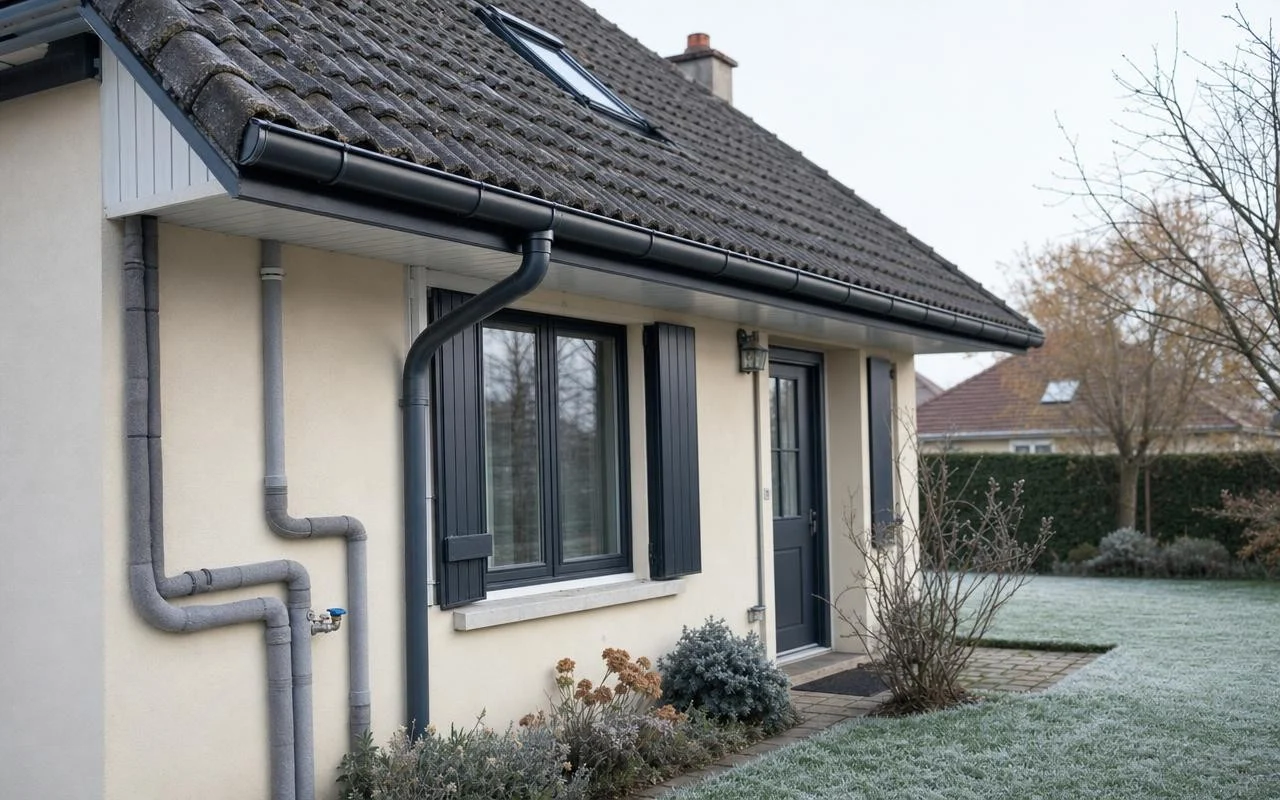
The frost-protection plumbing is addressed at the same time. Pipes in unheated spaces or outdoors should no longer contain water as the severe frosts approach. It is necessary to close the supply valves and open the taps to let the water drain. If a frozen pipe is detected despite everything, the rule is clear: cut the water, open the taps to relieve the pressure, and call a plumber. “Under no circumstances should non-professionals intervene themselves with a soldering iron or a hot air heater,” warns the German Firefighters Association, which recalls that several houses have already caught fire after such attempts.
Heating, Safety, and Small Steps for a House Ready for Winter
A house truly ready for the cold season also rests on a well-maintained heating system. In France, annual boiler maintenance is a legal obligation and a safety issue against carbon monoxide. It is therefore best to schedule the heating technician’s visit before temperatures drop, bleed the radiators, and test the installation for a few hours, in order to spot a malfunction before the first frosty morning. Air inlets and ventilation should not be blocked, or condensation and mold may appear.
Once the top of the house, the roof, and the plumbing are secured, one can move on to finishing touches that improve comfort and energy bills: seals around windows, door-bottom brushes, heavier curtains in front of bay windows. To stay organized, many families break this preparation into small sessions: a quick 30-minute tour of the house to spot weak points, a two-hour session to treat the attic hatch, the outdoor faucet, and caulking, then a weekend for the more visible works like gutter cleaning or reinforcing attic insulation.
