
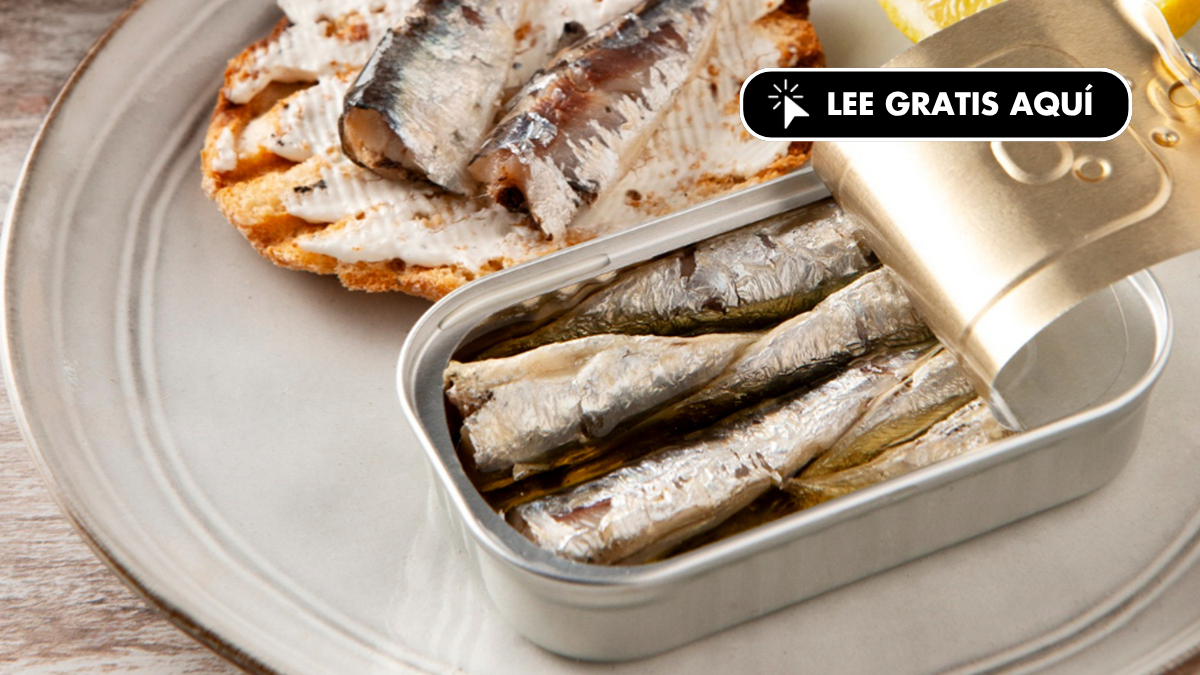
Anyone who keeps a can of canned goods in their pantry has a treasure. Not only because, in many cases, saves you from more than one pinch at mealtimes or dinnertime. Or even to resolve snacks and breakfasts, but for what they can do nutritionally. Obviously, not every canned solution is equally suitable, but when we talk about sardines, you get a perfect two-in-one.
Not only because we are including blue fish in our diet, but also because of a fine print that proves invaluable beyond proteins or healthy fats. In fact, many nutritionists agree, as we have noted on other occasions when discussing sardines, that they are “a source of high-quality protein,” even though they are “a calcium bomb if you consume them the right way.”
They present a curious paradox that does not occur in other canned fish. Nor in other canned shellfish. It is true that, depending on the type of fish, certain patterns repeat. If we talk, for example, about bonito, melva, mackerel, or sardines, all of them are fish rich in protein and in fatty acids like omega-3, known for cardiovascular benefits, as discussed by nutritionist Sandra Moñino.
They are also rich in protein, as is typical of any animal-derived product. However, canned sardines are great calcium allies if we know how to use them to their fullest and, curiously, in that regard they differ from fresh sardines.
The Sardine Transformation: How Canned Sardines End Up Containing Much More Calcium
It is, in a sense, paradoxical that a canned sardine contains a higher amount of calcium than a fresh sardine. Nevertheless, in certain preservation methods—just as with cheese—it happens. The more cured and aged a cheese is, the more water it has lost and, therefore, the greater the concentration of nutrients.
More calcium, more fat, more protein, more minerals and more salt… At least when compared with fresh cheeses, where the water percentage is much higher. Therefore, other nutrients are not present in the same concentration. However, the reason why canned sardines are a calcium-rich food—among the highest, as we have already noted in THE OBJECTIVE—is not a matter of concentration, but of the production method.
Calcium, an essential mineral for, for example, bones and teeth, surprises us in canned sardines for one reason: its presence in the spine. The spine of a sardine is the fish’s skeleton and, as one would expect, it contains primarily calcium. The issue is that, when the sardine is processed to become canned, its spine softens to the point that it becomes easily chewable, unlike what happens with fresh specimens.
The Nutritionists’ Recommendation for Canned Sardines: Eat Them Whole
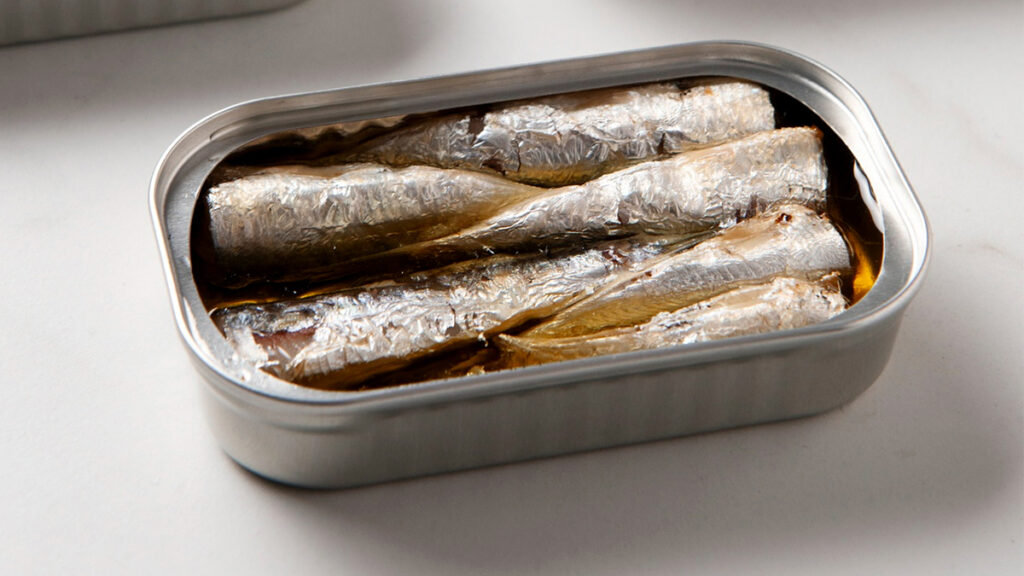
For that reason, when canned sardines appear, many medical and nutrition specialists recommend taking them without hesitation. Interpreting hesitation as removing the spine, regardless of the sardine in question, at the moment of eating it. By discarding it, we lose most of the calcium carried by the product. The Spanish Nutrition Foundation estimates 43 mg of calcium per 100 grams of edible product in fresh specimens. However, canned sardine, according to the Bedca Catalogue, contains up to 314 mg of calcium per 100 grams of product. In other words, it almost octuples the usual amount.
The Dr. María José Martínez Obiols explained this on her Instagram account, noting that “canned sardines can even provide more calcium than milk.” That said, with a caveat: “When consumed with the spines, since these become soft and fully edible during the canning process.” The same warning was given by nutritionist Elena Mestre, especially mentioning that sardines are also “quality proteins” that provide a sense of fullness.
View this post on Instagram
James Whitaker
I’m James Whitaker, a UK-based journalist focused on emerging trends and everyday stories gaining attention across the country. I cover the topics people start talking about before they fully break into the mainstream. My work aims to stay clear, factual, and closely connected to how news is actually consumed today.