
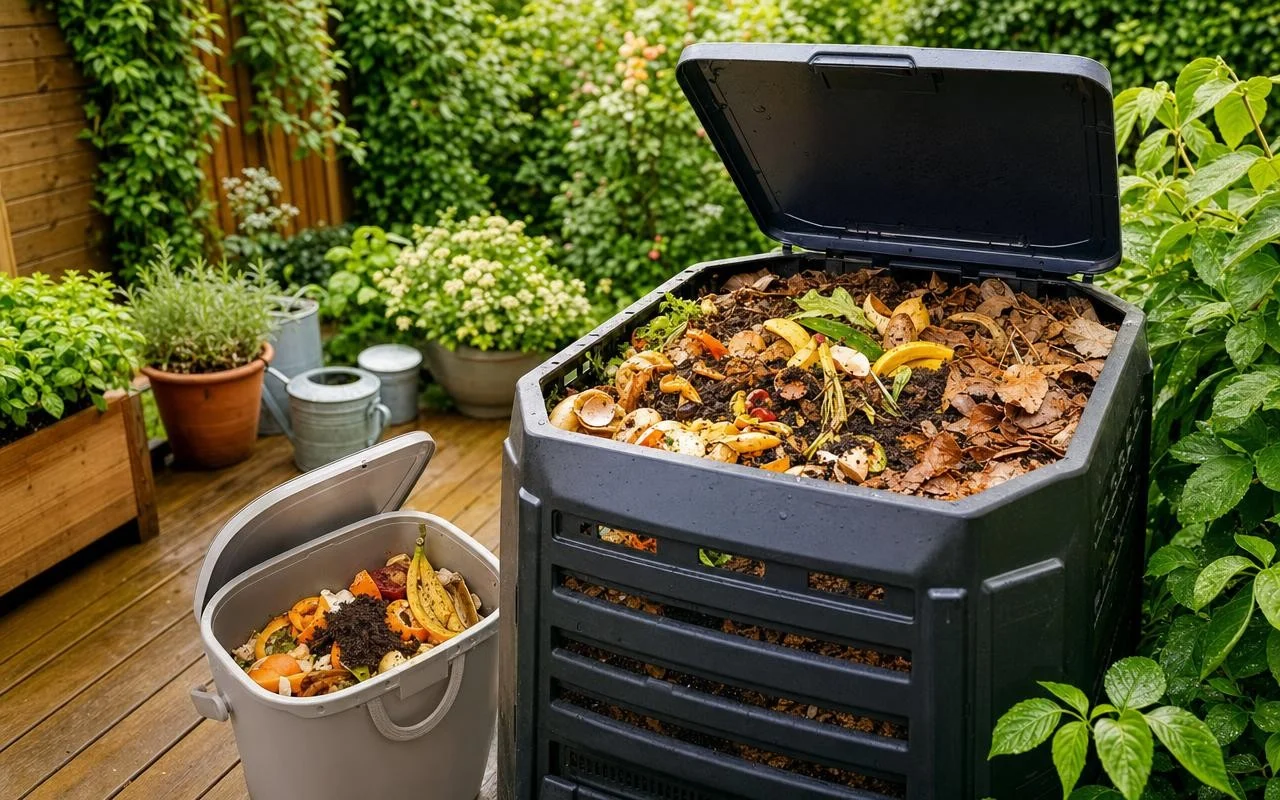
Since the sorting of bio-waste became mandatory on January 1, 2024, most French kitchens find themselves with a new daily habit: filling a compost bucket. Peels, crusts, leftovers… it’s easy to toss everything in, thinking that anything “natural” will eventually feed the garden. The reality is a bit more nuanced.
Some kitchen waste for composting turns into a rich and stable amendment; others raise odors, attract rats, or, worse, carry diseases into the vegetable patch. To navigate this, a handy rule of thumb works very well: 7 wastes to put in without hesitation, and 4 to leave out of the compost. It all hinges on that.
7 wastes to put in the compost without hesitation
Kitchen wastes that can be composted are mostly plant-based. For a domestic compost in a bin or a pile, these 7 contributions are true allies, provided they are mixed with dry materials such as fallen leaves or shredded brown cardboard:
- Fruit peels and cores
- Leftovers and trimmings of vegetables
- Coffee grounds and paper filters
- Tea leaves or herbal infusions without a plastic sachet
- Well-crushed eggshells
- Stale bread in small pieces
- Small amounts of cooked rice or pasta, without sauce
These wastes are high in water and nitrogen, perfect for feeding microorganisms. Cut thick pieces, avoid compact layers of coffee grounds, and always bury bread, rice, or pasta under a layer of “brown.” This simple cut-mix-cover trio limits bad odors, prevents the arrival of fruit flies, and keeps an aerated compost that breaks down regularly.
4 wastes to avoid in domestic compost
Some leftovers, even biodegradable, almost always pose problems. Meat and fish quickly attract rats, foxes, and flies, just as dairy products (milk, yogurt, cheese) ferment and emit a strong odor. Cooking oils and fats coat other materials, push air out of the pile, and slow decomposition. In a traditional garden compost, these inputs often end up spoiling everything.
Bones accumulate drawbacks: they decompose very slowly and almost always arrive with a bit of fat or meat. In an unheated domestic bin, they can remain visible for years. For these four categories, the simplest solution remains the residual waste bin or a dedicated collection, and not the garden composter.
Cas particuliers et bons réflexes pour un compost sain
Some wastes require more nuance. Citrus peels are fine in the compost in small quantities; in too large volumes, their compounds can hinder worms and bacteria. Potato peels are acceptable if healthy, but should be avoided if there are suspicious spots, because the potato blight remains in the tissues. Cooked tomato or pepper scraps can be composted, but not diseased plants: the blight-causing fungus Phytophthora infestans survives in a warm compost and can return to contaminate the vegetable garden.
Another detail that changes everything: systematically remove stickers, staples, and plasticized tea bags, which do not degrade and pollute the compost. Onion, garlic, and leek remain acceptable in a traditional heap, but should be limited in a worm compost bin. To keep a stable compost, always alternate “green” wastes (peels, moist leftovers) and “brown” dry ones, bury sensitive scraps, and mix regularly. A garden compost generally operates at a moderate temperature; it nourishes the soil very well, provided you reserve the right wastes for it.
