
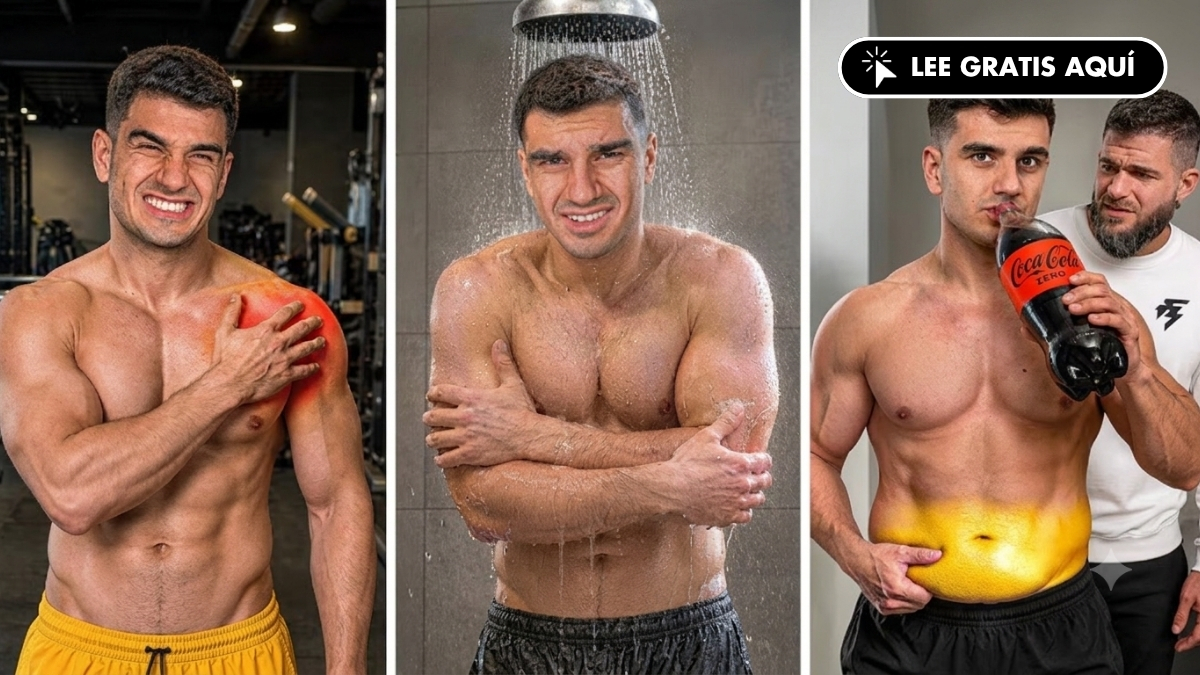
The world of fitness is full of myths and rules that everyone tries to follow, even though not all of them are correct and they do not work for everyone in the same way. And, while it is true that many of these beliefs are false, there are others that do have solid foundations and, therefore, can be applied even at a broader level. To understand them better, trainer Carlos Gómez has analyzed this through a YouTube video and has shown what the most common mistakes in nutrition and training are that are wasting your time.
Is it possible to gain muscle and lose fat at the same time?
Gaining muscle and losing fat at the same time is entirely real, but it does not happen to everyone or occur by magic. As explained by coach Carlos Gómez, this only occurs in very specific cases, such as when you are a beginner and your body responds super quickly to weights, if you have been out of training for a while due to an injury or laziness and you start again, or if you had been performing the exercises and the meals poorly for a long time and suddenly start doing things correctly. It can also happen if anabolic substances are used. On the other hand, if you have been training for a long time, you have experience, and you do everything correctly, achieving both at once is almost impossible, so you should focus first on gaining muscle or on losing fat.
Although needing to do one thing first and then the other might at first glance seem like a long and tedious process, the truth is that it isn’t that difficult. When you already have experience you know which routine to follow, so you can reach the first objective more directly and then the second.
You cannot take sweat as a reference point
Many people believe that the more you sweat, the more fat you burn, but science says quite the opposite. Finishing a workout drenched in sweat doesn’t mean you’re burning fat; it simply means you’re losing water and minerals that you regain as soon as you drink, because, as the expert on sweating emphasizes: “Our body heats up and sweating is a mechanism we use to cool it down. Therefore, sweating does not mean fat loss.”
Moreover, contrary to what has started circulating on social networks, it is not true that you must rush to the locker room to drink your protein shake as soon as you drop the weights for fear of losing the workout. That urgency to eat right after finishing isn’t necessary, because what truly matters is reaching the total amount of protein your body needs over the course of the day, since it continues to utilize nutrients for many hours after exercising.
Nutrition and Supplement Myths
One of the most widespread myths is the idea that you need to add protein to your diet to build muscle faster. Well, this is completely false. Adding more protein to your body than it needs will not automatically make you much more muscular, and, of course, it does not mean you should stop consuming foods that naturally contain protein. Protein is only necessary for those who train a lot and who do not manage to reach the amount their body naturally requires through foods.
Also, it isn’t true that creatine makes you bald despite what has been said recently on social networks; it all stems from a misunderstanding of an old study, and, as the coach confirms: “As controlled trials on hair density and hair health have progressed, they have found that this is not true. You can take it safely.”
On the other hand, the sugar in fruit is not bad because it comes accompanied by fiber and vitamins, making it a great option for taking care of yourself, just as zero-calorie soft drinks, which have no calories, use safe sweeteners and are better than regular ones.
To finish, not all calories are equal for your body; even if they provide the same energy, eating low-quality foods worsens your health, and as the expert reminds us, “You don’t just want to be strong, you also want to be healthy.”
Training and Rest Myths
Regarding the best time to train, one of the most widespread myths is that having a lot of soreness after a workout unquestionably means you did the exercises correctly and, therefore, you will see results sooner. However, this is not a sign of a better workout; it indicates you tried a new exercise or overdid it, which will only slow down your recovery.
Nor is it necessary to obsess about sleeping exactly eight hours in a row, because some people need seven hours while others require nine; what matters are regular sleep schedules and good stress management, without relying on things like nasal strips that, although they open the nostrils and give a sense of air, we do not have evidence that they improve recovery.
On the other hand, when it comes to exercising, machines are not better or worse than free weights or calisthenics, since the latter help work balance and machines allow you to push to the limit with less risk, so combining both is ideal.
Finally, there is no magical number of six to twelve repetitions for gaining muscle; you can achieve results with four or with eighteen if you push yourself to the limit and stay just short of being unable to do another repetition.
