
A sparkling sink, a disinfected faucet, a spotless floor… and yet that small sewer odor that returns every morning hits you in the nose. We quickly blame the trap, consider a plumbing issue, even switch cleaning products, without lasting results. The impression is unsettling, because everything appears clean to the naked eye.
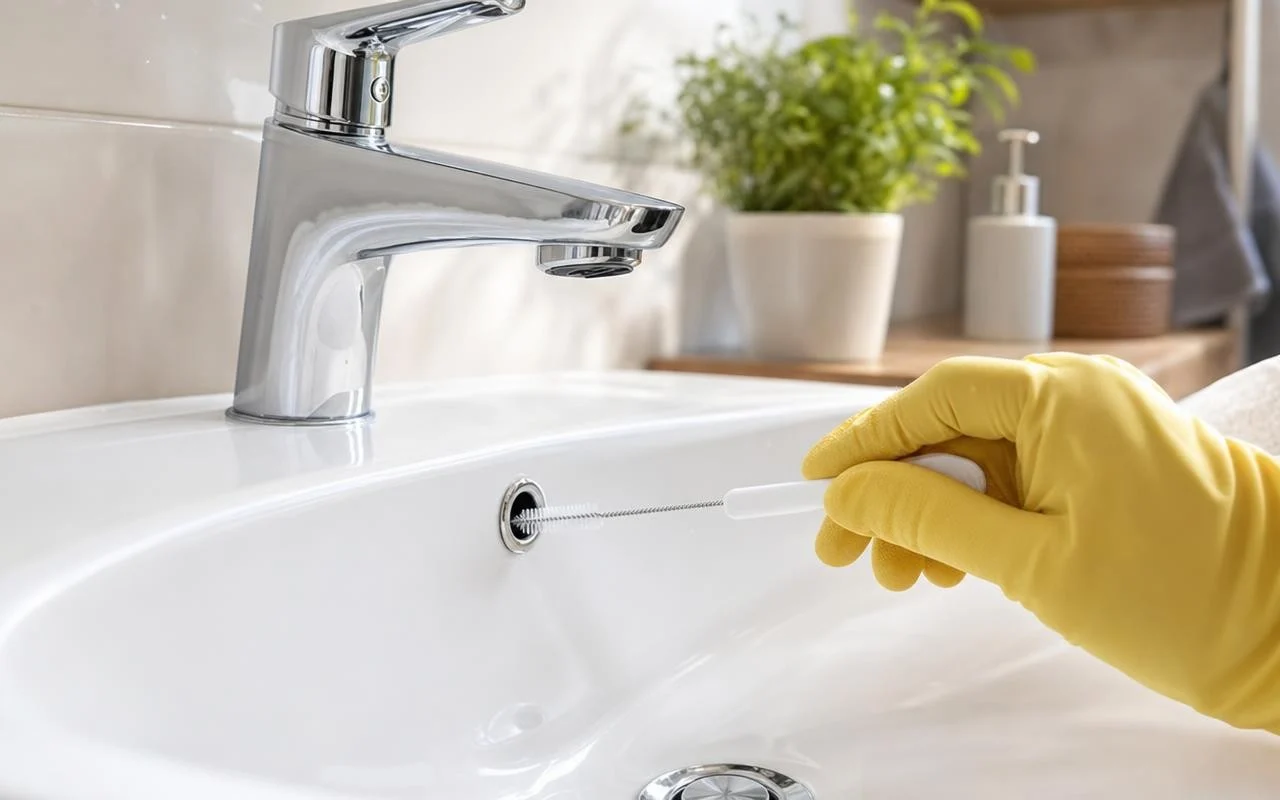
Right beneath the faucet lies a tiny oval opening carved into the wall of the basin. Discreet, almost invisible, it never sees the sponge pass. This hole is the overflow. In many bathrooms, this is where the odors are born, even if you don’t suspect it yet.
Sewer odor at the sink: what the overflow hole hides
The overflow of the sink is a simple safety device: if the water rises too high, it drains through this internal channel instead of spilling onto the floor. The drawback is that this conduit is never truly rinsed. With every brushing of teeth or washing of hands, a film of soap, toothpaste, cosmetics and dead skin cells slides along the basin and eventually reaches this opening, where deposits accumulate slowly.
In this narrow corridor, always damp and shrouded in darkness, the deposits do not dry. They transform into a black, viscous mud: a biofilm of bacteria and organic matter. This biofilm ferments, produces gases, and these gases escape… not only through the overflow hole, but also through the drain plug. It feels as if the entire plumbing smells, even though the source is just a few centimeters from the faucet.
Cleaning the sink overflow: express method in a few minutes
The good news is that a thorough overflow cleaning takes less than ten minutes. The principle: circulate a cleaning agent inside the conduit, then scrub it. A trickle of white vinegar or a little bleach poured directly into the opening begins to dissolve the deposits. Let it work for about twenty minutes, then rinse generously with very hot water. Never mix bleach and vinegar, as that mixture releases an irritating gas; it is better to choose one product or the other and ventilate the room well.
- A small toothbrush or fine brush to scrub the entrance of the hole
- A beaked container, a pipette or a kitchen syringe to inject the liquid
- Some baking soda and white vinegar, or heated vinegar
The mechanical action remains decisive. By scrubbing the inside of the opening with the brush, you actually dislodge the biofilm rather than merely masking the odor. The baking soda–vinegar version works well: pour a tablespoon of baking soda into the hole, then a large glass of white vinegar. The foaming reaction helps lift the deposits, followed by a rinse with very hot water. If the conduit is heavily descaled, preheating the vinegar further enhances the descaling effect.
Odor-control routine and mistakes to avoid around the overflow
A single cleaning is not enough for good, because the biofilm rebuilds itself with daily use of the sink. A reasonable frequency is to service the overflow once a month, at the same time as the trap. A simple step: regularly pour a tablespoon of baking soda into each drain, followed by very hot water. This routine prevents deposits from clumping and limits the return of bad odors to the bathroom.
Harsh chemical drain cleaners are still not recommended for routine maintenance. Their residues can feed the biofilm and generate temporary unpleasant gases. When the odor recalls rotten eggs, it may be linked to the presence of hydrogen sulfide; health authorities emphasize that smell is not a reliable indicator of its concentration, hence the importance of good ventilation. If, despite a well-cleaned overflow and a regular routine, the odor persists, the problem may lie further in the installation and justify the opinion of a plumber.
