
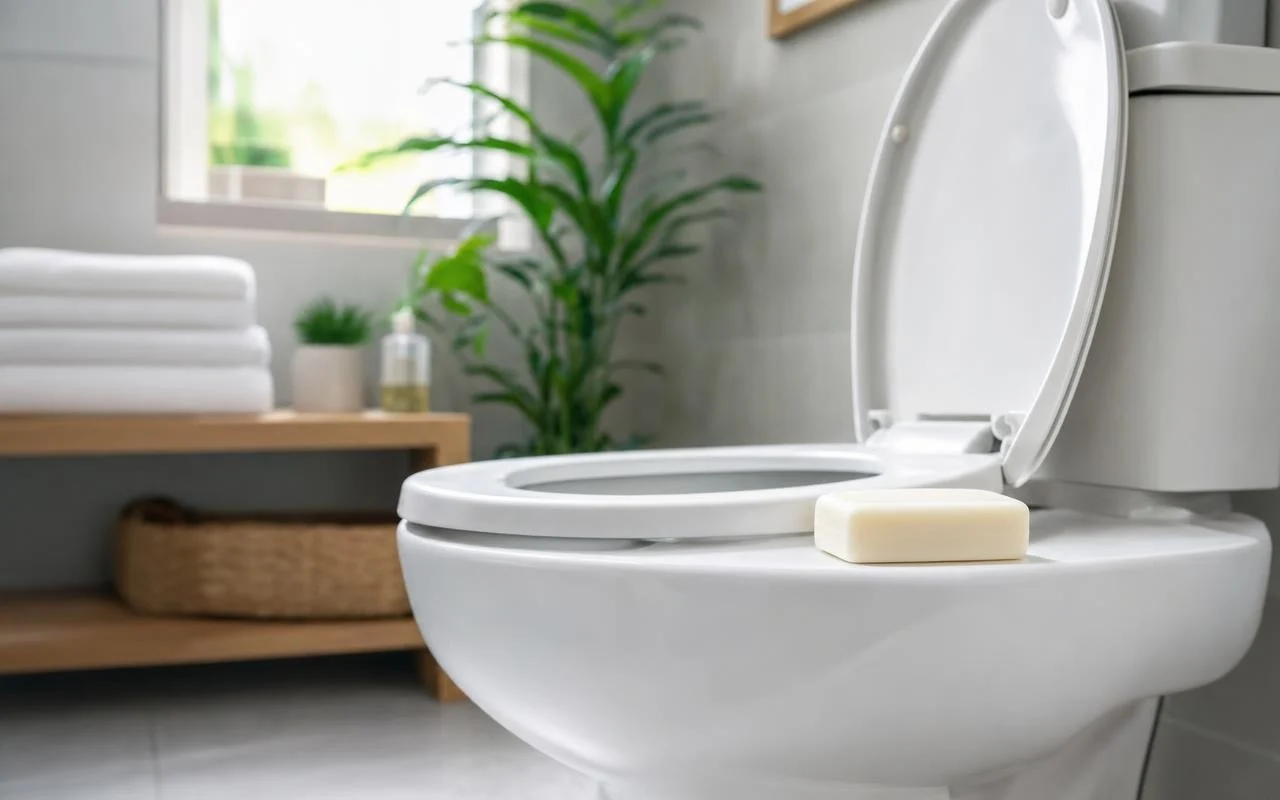
Across social networks, the tip to put soap in the toilet is everywhere, sometimes pitched as a miraculous solution for a spotless bowl with minimal effort. Between viral videos and recipes shared among friends and family, it’s hard to tell what’s just a helpful nudge and what actually works in daily life.
In reality, this idea often stems from a very concrete need: to keep toilets clean and to limit unpleasant odors without accumulating a lot of cleaning products. A simple bar of soap, and even small leftovers, can serve as the base for a homemade cleaner for the bowl. The real question remains: in which cases is this gesture truly useful, and when should one switch to something else?
Putting Soap in the Toilet: The Real Daily Benefits
Diluted in hot water, soap forms a practical solution for cleaning the interior walls of the toilet bowl. It is applied as a spray to the inside of the bowl, especially where grime tends to accumulate, then left to act for a few minutes before scrubbing. This mixture helps lift everyday marks and keeps the bowl visually clean between heavier cleanings.
Another advantage: the fragrance of the soap leaves a fresh scent that softens odors after brushing and flushing. And this trick also allows recycling small soap pieces that have become difficult to use for hands. Instead of discarding them, you gather them to make a homemade cleaning product, which modestly reduces waste without changing your routine.
Why this soap trick is recommended… and its limits
This method is well-suited for routine maintenance: regular households, families wanting to limit harsh products, or homes connected to a septic tank where care is taken about what goes into the bowl. Sanitary manufacturers like Geberit even cite Marseille soap or black soap-based solutions as compatible with many septic tanks when used in moderation.
The limits are clear in the recommendations of specialty sites: for well-established calcium deposits or specific disinfection (after a gastroenteritis, for example), a proper product remains necessary. We can summarize the good practices as follows:
- Good practice: regular cleaning of the toilet bowl and light soiling.
- Good practice: reduce odors and maintain a fresh feel.
- Less suitable: thick limescale or long-standing marks.
- Less suitable: need for genuine disinfection, where a dedicated product is required.
How to Use Soap in the Toilet Without Risk to the Plumbing
The simplest method is to cut up or grate a bar of soap, or scraps, into small pieces. Place them in a saucepan with water, heat gently while stirring until the soap fully dissolves and the mixture becomes smooth. After cooling, pour the preparation into a clean spray bottle to obtain a liquid that is fairly runny and easy to spray.
For use, spray the mixture on the interior walls of the bowl, let it sit for a few minutes, then scrub with the toilet brush before flushing. However, toilet manufacturers like Gerber discourage adding products, including blocks or tablets, into the tank: these blends, especially those containing chlorine, can damage internal parts and cause warranty issues. It’s therefore better to reserve the soap for the bowl, use a proper descaling product (for example citric acid-based or a dedicated toilet cleaner) for thick scale, and keep the soap spray for maintenance between two major cleansings.
