
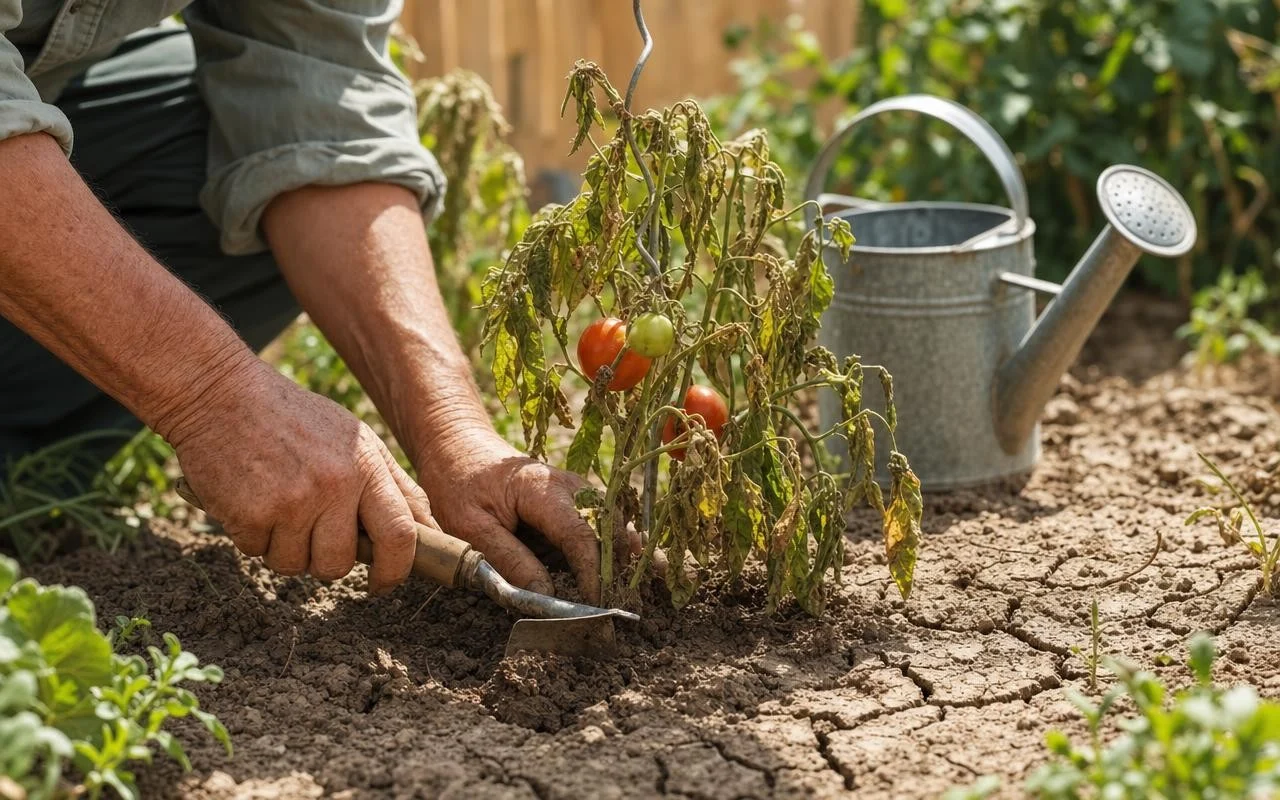
Back from vacation, suitcases still in the entryway, and already a pang in the heart: the vegetable garden seems to have aged a bit. Cracked soil, drooping leaves, withered tomatoes… After a long absence and several days of heat, the first reflex is almost always the same: open the tap fully and flood the beds to catch up on the watering.
The old-time growers were precisely wary of this fast soak, capable of creating a real hydraulic shock. Their method, described by many farmers, began with a simple yet decisive gesture, one that is often forgotten today: ease the plants before watering them. This precise ritual, applied in this order, completely changes the recovery of the vegetable garden on returning from vacation.
Back from vacation in the vegetable garden: the first action the old-timers always took
Even before pulling out the watering can, the elders would pass along the rows with their pruning shears to harvest everything: tomatoes nicely red, oversized zucchinis, hidden cucumbers, lettuces bolting. The Journal des Seniors describes this ancestral gesture as a total and immediate harvest of everything that can be eaten. The plant, relieved of its fruits, can then channel its sap toward its own survival and toward the regeneration of its roots.
In practice, this first step looks like a large post-market sort. You fill crates and baskets with all that is ripe, set aside the damaged vegetables that will head to the compost, and leave only what still has real production potential in place. In passing, this cleaning limits the spread of diseases and gives you a clear view of what can resume production.
Restarting watering in the vegetable garden: rehydrate without shock after a long absence
Once the plants have been lightened, comes the moment to reopen the tap slowly. The soil, left dry for several weeks, commonly forms a hard crust that is nearly impervious. The specialists from Jardinage PagesJaunes advise hoeing the surface very superficially to break this barrier without injuring the roots, then delivering water at room temperature, late in the day, directly at the base and in moderate amounts. This true gradual watering avoids flooding a soil that is still fragile.
To prevent water from running off without soaking in, Jardiland recommends two watering passes spaced about 20 minutes apart, always at soil level. Too much water at once increases water stress and risks suffocating the roots. The practical guides from PagesJaunes then suggest waiting 4 to 5 days before resuming a “normal” pace, the time needed for the soil to truly re-moisten and for microbial life to reawaken.
Mulching and good habits: helping the vegetable garden restart after the drought
When the plants have somewhat re-tightened their growth, the next phase consists of removing anything irretrievably dry. Yellowed leaves, withered stems, scorched fruits drain the sap unnecessarily and favor cryptogamic diseases. The PagesJaunes Gardening sheets recommend not removing more than about 20% of the vegetation at once, so as not to further weaken vegetables that have already endured stress.
When the soil is well moistened, the old-timers would finish with a fresh mulch, laid 6 to 8 cm thick around each plant: straw, hay, hemp, flax, or well-dried lawn clippings. This vegetal cloak keeps the soil cool, limits undesirable weeds, and protects soil life. To ensure this rescue succeeds, a few mistakes must absolutely be avoided:
- Drenching the entire garden at once.
- Installing mulch on dry soil.
- Removing the majority of the foliage in one go.
