
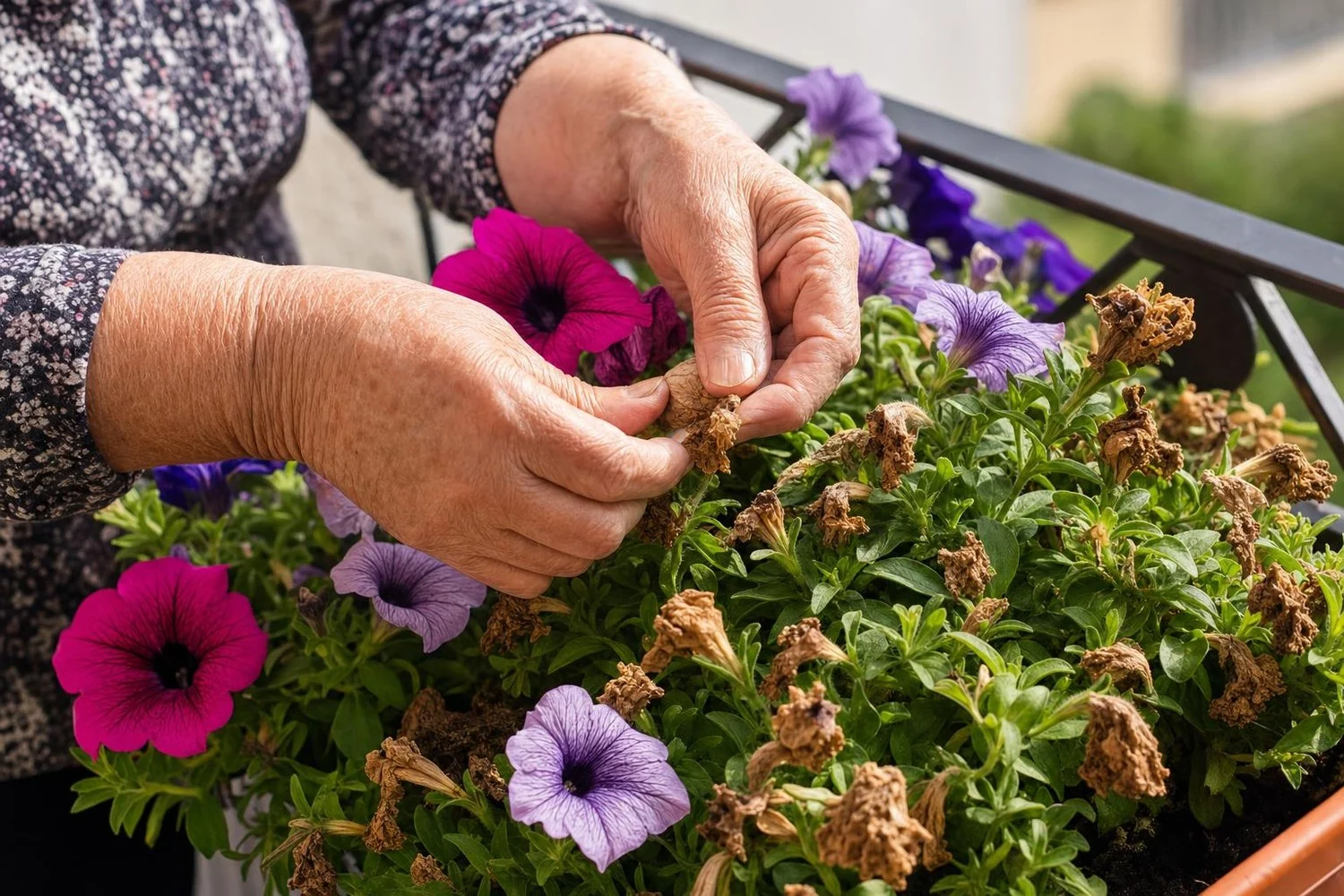
A balcony cloaked in fragrant bouquets in spring, then, in the heat of summer, bare stems and brown petals hanging down… Many assume their faded petunias are a lost cause by this point. Yet the old-time gardeners had a simple, ruthlessly effective method to coax them back to life, almost as if they were in their first bloom.
Petunia planters fatigue when they waste energy producing seeds, especially in heat and with irregular watering. Grandmothers knew this well and practiced a precise gesture: a meticulous cleaning of dried flowers, complemented by a rejuvenating pruning and a generous dose of nourishment. Everything hinges on how you remove the faded flowers and how boldly you trim the clump.
Why your faded petunias can bounce back with a simple grandma trick
When a petunia flower dries, the plant channels its reserves into the small green capsule that houses the seeds. The longer these capsules linger, the more the bloom slows. By systematically removing these dead flowers, you prevent the plant from completing its reproductive cycle and “force” it to produce new flower buds, something horticulturists call deadheading.
A lack of light also plays a big role. Petunia is a sun-loving plant: to stay cloaked in flowers, it needs at least 6 hours of direct sun, ideally 6 to 8 hours. When you add to that soil worn down by repeated watering and a few leaves drying in summer, the clump thins out. Yet if the roots are still healthy, this grandmother’s trick often suffices to restart the machine.
The ancient gesture: cleaning faded flowers and pruning petunias to the right height
The protocol begins with a thorough cleaning. Pinch with fingers or cut with sterilized scissors every stem bearing a brown or soft flower, just above the small green bulge (the seed capsule) and the next leaf node. Other experts advise cutting just above the closest leaf, which is the same: you remove the entire exhausted portion of the stem. On a fatigued plant, this action is repeated every 2 or 3 days to continuously stimulate the appearance of new buds.
When the foliage becomes truly dry, the stems lengthen and the plant hardly looks like itself, rejuvenation pruning comes into play. It involves recutting most of the stems to about half their length, while removing the oldest, weakest shoots along the way. Petunias tolerate these cuts very well, even several times in the season, and respond by branching more, forming a denser shrub and far more floriferous once restarted.
Fertilizer, sun and watering: completing the grandma’s trick for prolonged flowering
After this “rejuvenation,” the plant needs fuel. Specialists recommend a balanced liquid fertilizer for flowering, with a nutrient ratio such as 10‑10‑10 or 20‑20‑20, diluted into the watering water according to the label. On weakened petunias, apply it weekly, then every two weeks once flowering restarts. Always pour the solution at the base, avoiding wetting the foliage, to prevent burns and diseases.
The light remains decisive. A spot in full sun ensures the most generous blooms: at least six hours of direct sun per day, aiming for about 6 to 8 hours. In very hot regions, a simple shade sail during the scorching noonday hours is enough to protect the petunias without depriving them of light. As for water, the soil should stay moist but not waterlogged: during intense heat, you can water almost daily, in cooler conditions every two to three days, allowing the surface to dry between waterings. Water should always be poured at the base, never on the flowers or leaves, as lingering moisture fosters fungal growth. Among the mistakes that cause the plant to flop, gardeners mainly point out:
- leaving the dry flowers and seed capsules in place;
- watering from above, wetting the foliage;
- forgetting fertilizer after pruning;
- lacking direct sunlight;
- letting water stagnate in the saucer.
