
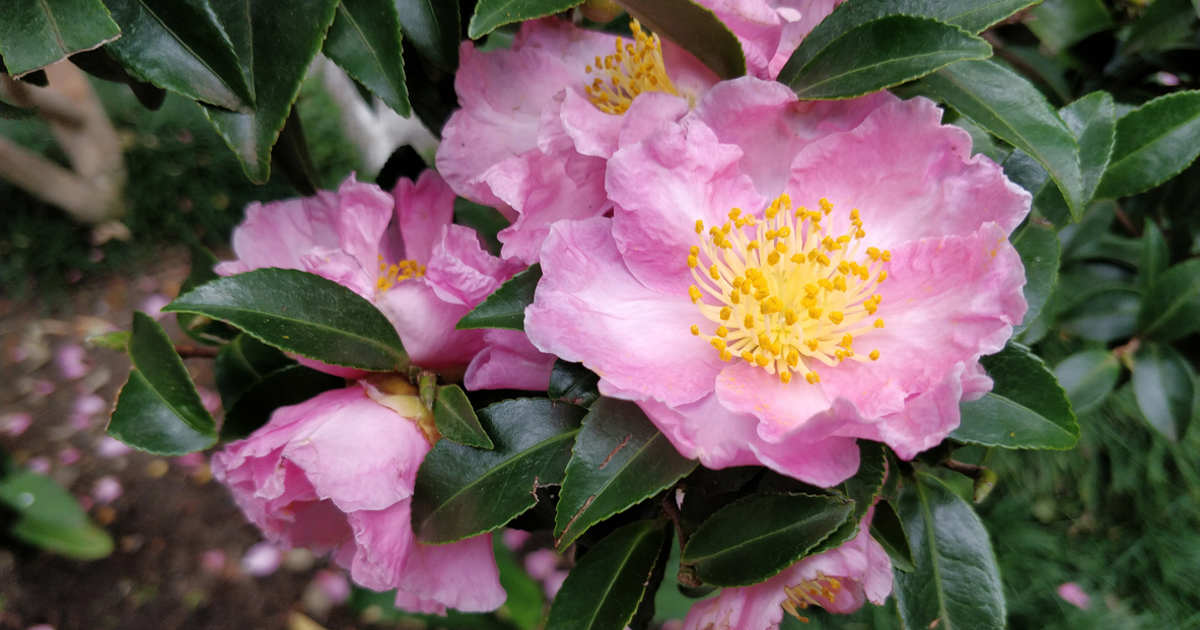

The Camelia sasanqua, one of the winter garden’s stars, blooms between late autumn and the heart of Christmas, just as colour bursts indoors and out are most welcome.
Unlike other camellias that are more demanding, this species stands out for its adaptability, its generous flowering and a beauty that is less rigid, more natural. Discreet, elegant and hardy, it has much to offer, both in the garden and on balconies or terraces, as it also grows well in a pot. For this reason it has become an increasingly valued option for those seeking an ornamental plant that is durable and grateful.
What is Camellia sasanqua and where does it originate
In Spain, the Camelia sasanqua is commonly known as the winter camellia. It belongs to the Theaceae family, the same family as the Japanese camellia and the tea plant.
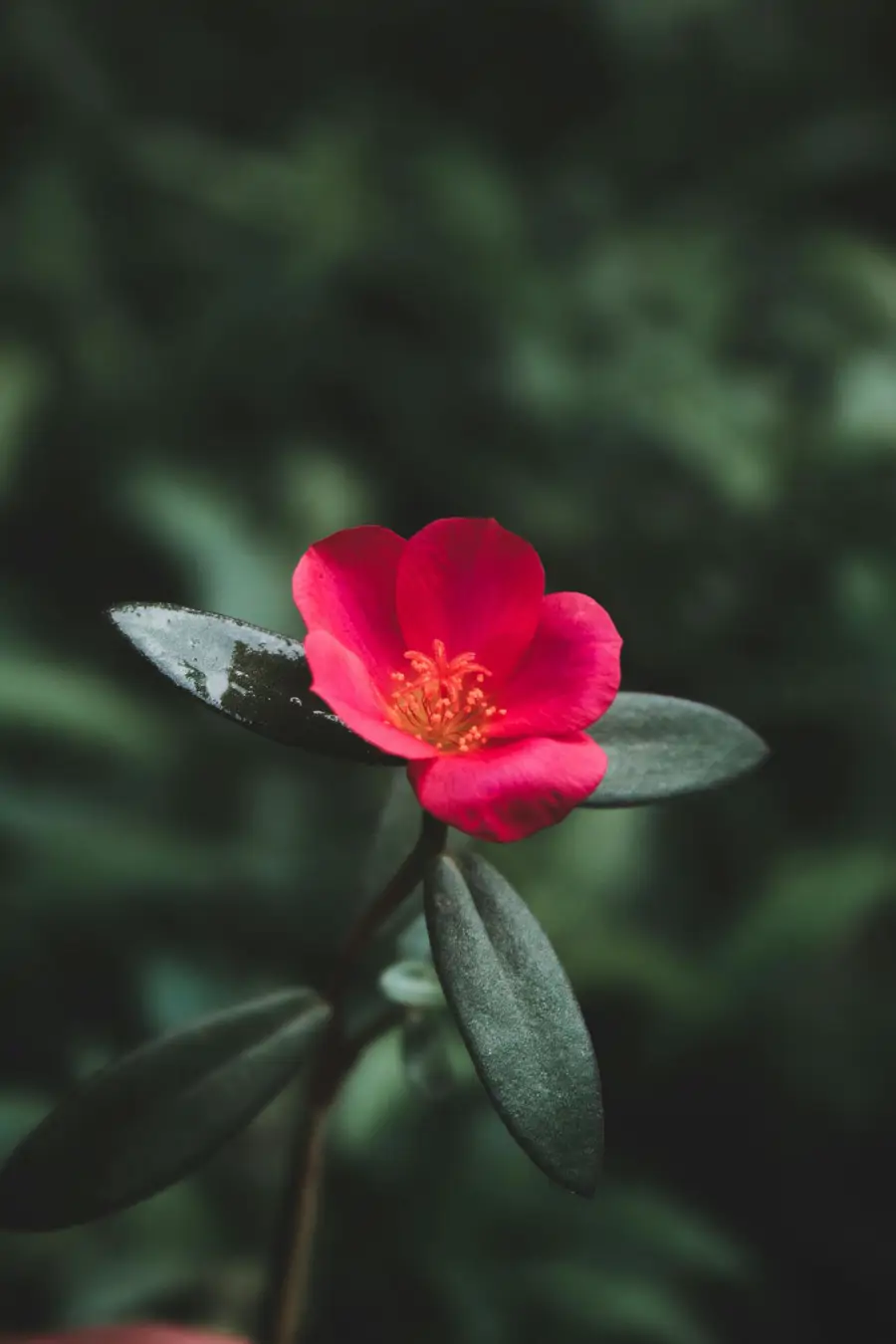
Its origin lies in East Asia, principally Japan, China and Korea. In the wild it grows in wooded areas, with acidic, well-drained soils and protected from the sun’s harsh rays, which explains many of its cultural requirements.
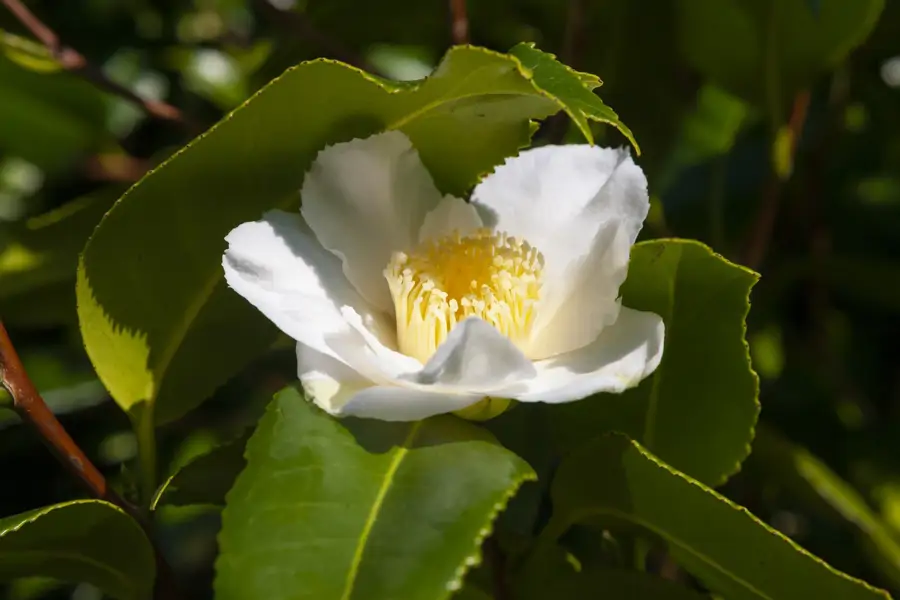
The flowers of the Camellia sasanqua range from pure white, through various shades of pink (soft to deep), to red hues (cherry or fuchsia). There are also bicolour or variegated varieties, offering a wide spectrum for autumn and winter flowering, such as the red ‘Yuletide’ or the pink ‘Jean May’.
Why it is called the Christmas Camellia
The Camelia sasanqua differs from other camellias by its early flowering, which can begin in late autumn and extend well into winter. Many varieties reach their peak in December, which has traditionally linked it to the festive season and it should feature among any selection of December’s prettiest plants.
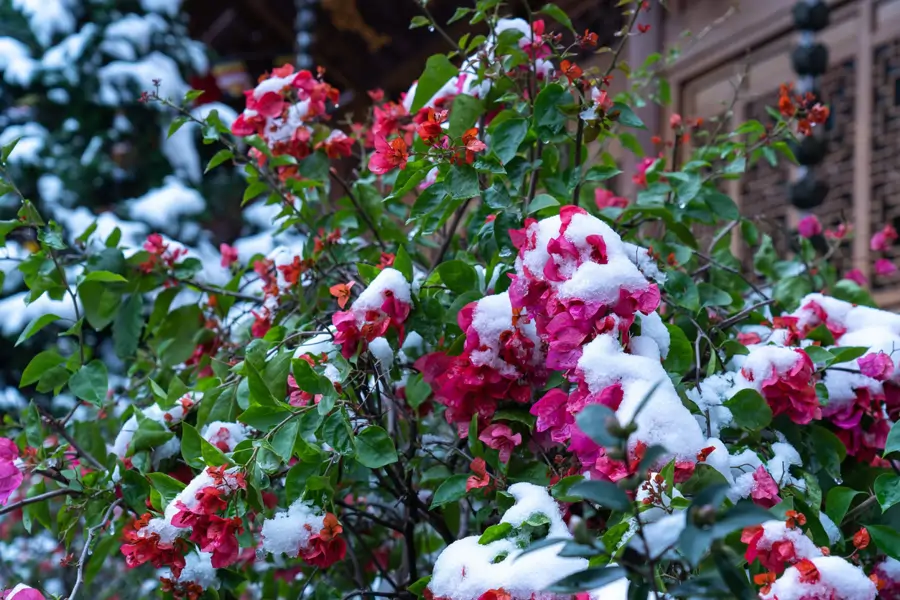
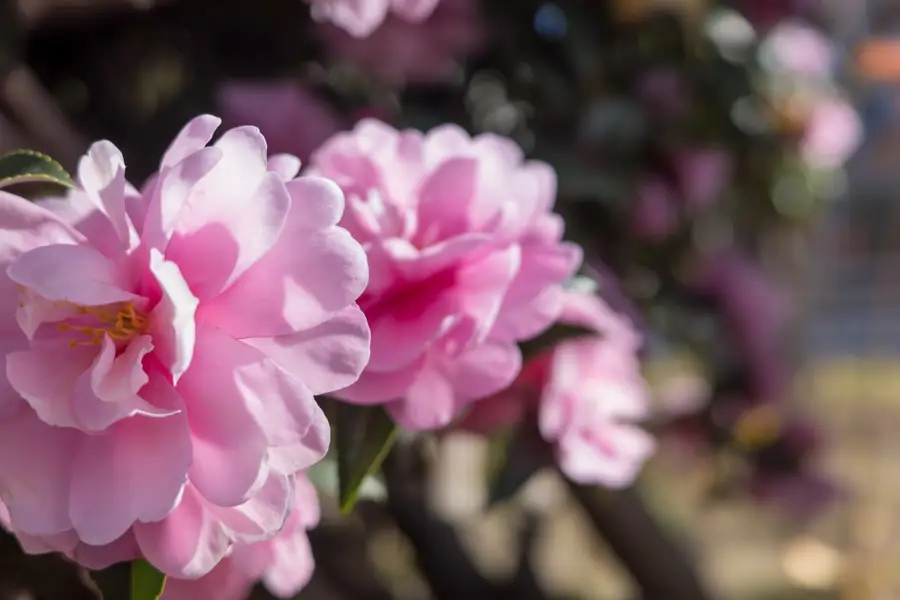
The flowers are usually simpler than those of the better-known Japanese camellia, but they are often more abundant and lighter. In addition, many varieties emit a gentle fragrance, something rather uncommon in other camellias.
Light and ideal placement
One of the strengths of the winter camellia is its tolerance of different light conditions, so long as extremes are avoided.
The ideal is to place it somewhere that receives plenty of light, but without strong, direct sun, especially in summer.
On the warmer days it benefits from a bright, dappled shade and in the garden it should be sheltered from both cold winds and the noonday sun.
It tolerates sun better than other camellias, particularly in winter, which makes it more versatile for outdoors as well as for terraces.
How to water the winter camellia
Watering is one of the key care tasks to keep it healthy and flowering well. The Camelia sasanqua requires regular watering to keep the substrate lightly moist. As with all plants, but especially this one, avoid permanent waterlogging at all costs.
During flowering, it is particularly important not to let the substrate dry out completely, as this could cause buds to drop.
If possible, use soft water (low mineral content), filtered or rainwater, as it is sensitive to lime.
Soil and substrate
As with other acid-loving plants, the winter camellia requires an acidic, loose, well-drained substrate. Ideally, use a substrate specifically for ericaceous plants—a mix of peat, organic matter and sand, with good drainage.
A poor substrate often shows itself by the appearance of yellowing leaves with green veins, a clear sign of chlorosis.
Fertilising and nutrition
To maintain abundant flowering and healthy foliage in your sasanqua camellia, it’s wise to provide nutrients regularly.
You can use a fertiliser specifically for ericaceous plants and apply it from spring to late summer, at the doses and frequency recommended by the manufacturer. Fertilisation is suspended during the winter flowering.
You can also use small doses of homemade vinegar as fertiliser.
Too much fertiliser can be as harmful as too little, so it’s wise to follow the recommended amounts.
Pruning the winter camellia: minimal and well considered
The Camelia sasanqua does not require heavy pruning. In fact, it benefits from being allowed to grow naturally. Only prune to remove dead or damaged branches after flowering. In autumn, avoid pruning to prevent losing flower buds.
Its growth is elegant and somewhat looser than that of other camellias, which is part of its charm.
Transplanting and container cultivation
If grown in a pot, transplanting should be done with care. Key points:
- Repot every 2 or 3 years, preferably in spring.
- Always use pots with good drainage.
- Do not bury the plant’s crown.
In a container, monitor watering and nutrition more closely, as the compost depletes more quickly.
Pests and the most common problems
The sasanqua camellia is fairly hardy, but may be affected by a few common problems. The most frequent are:
- Soffing scale (cochineal), especially in dry environments.
- Aphids on new growth.
- Chlorosis from excess lime in water or soil.
- Bud drop due to water stress or sudden temperature changes.
Regular observation will help detect any issue in time.
A key measure to make it bloom every winter
If there is one crucial care item, it is consistency in watering and choosing the right location. Keeping it in a stable spot, without sudden changes and with controlled humidity, helps it to repeat its flowering each year.
Additionally, mulching with pine bark or organic matter helps retain moisture and maintain soil acidity, especially in the garden. This measure significantly improves its health and overall appearance, turning the Camelia sasanqua into a true winter jewel enjoyed year after year.
