

Lack of time is the most common barrier today to not exercising. Accordingly, the recommendations we’ve gathered from experts at Cuerpomente concur on the need to prioritise efficiency and intensity over quantity in fitness routines. For most people, the solution lies in optimisation techniques that guarantee a strong stimulus with a minimal time investment.
That is why all the coaches agree on prescribing short programmes, between 10 and 25 minutes, which must be performed with high frequency and should be only lightly fatiguing to ensure adherence and turn exercise into a sustainable habit over time. Here are some of the most popular and influential strategies from the leading fitness coaches and experts of the moment.
Thus, all trainers agree on short sessions—10 to 20 minutes—and high frequency. Furthermore, Isidro, who regards himself as a “pharmacist of exercise,” insists that the dosing is key, since exercise has a minimal effective dose and an overdose. He also asserts that, to promote the habit, intensity should not be tied to fatigue, aiming for training to be “as fatiguing as possible.” Consequently, he maintains that “10-minute programmes are far more effective than programmes of 0 minutes or 1 minute.”
Alberto Cara: “combine opposing-muscle exercises with no rest”

The fitness coach provides five key tips to optimise exercise sessions when time is tight, aiming to get a lot done with little time. He recommends limiting warm-ups to ramp sets of the first exercise. For him, it is essential to prioritise multi-joint exercises, which involve several muscle groups at once, such as dips.
One essential point for the expert is intensity: you must push towards failure in every set to maximise the stimulus, since a single high-intensity set is more effective than several incomplete sets, as “most people, subconsciously, stop short”.
Cara recommends stimulating each muscle group more than once a week. He also suggests incorporating advanced techniques such as dropsets or supersets to obtain extra stimulus in a short time. Although Cara warns: “Use these techniques only on exercises you master technically to avoid risks and maximise results”.
Marco Asnaghi: “If I were a woman with very little time, I would do this 20-minute routine at home”

The personal trainer proposes a 24-minute express full-body routine for women with very little time, which can be done at home using only two dumbbells. The aim of this routine is to combat sedentary behaviour and sarcopenia, as the expert notes, “with this routine you are effectively working your whole body”.
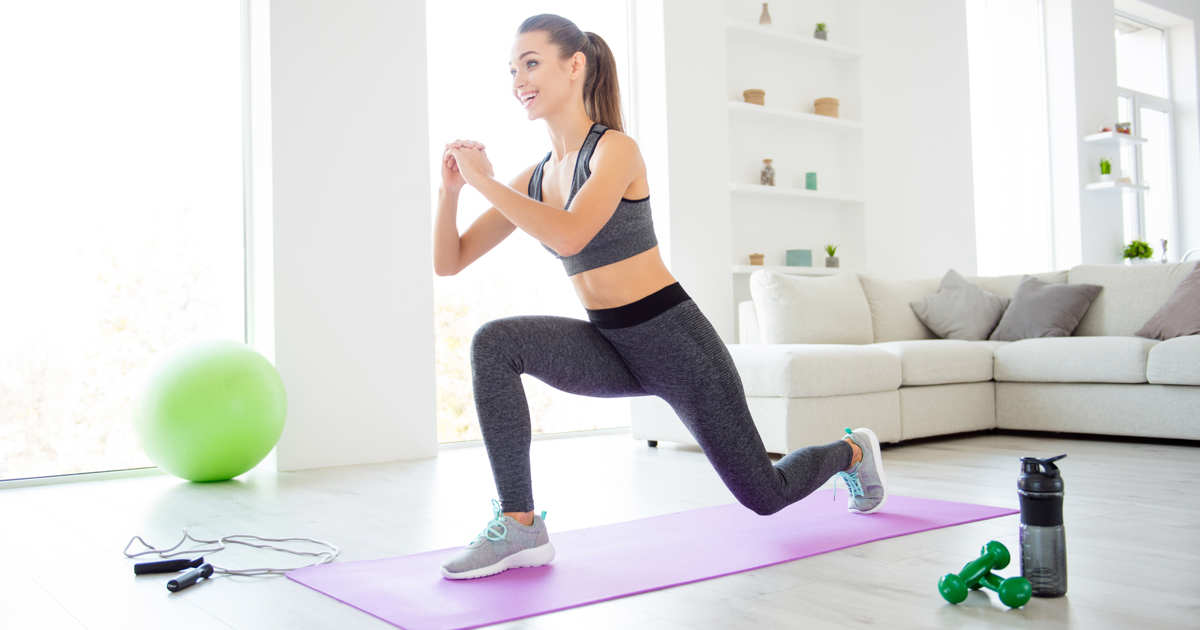
“If I were a woman with very little time to train and only had 20 minutes, this is exactly what I would do,” Asnaghi explains. The routine is split into two 12-minute blocks, using intervals of one minute work and one minute rest. The first block consists of dumbbell squats and push-ups. The second block combines dumbbell rows with lunges, alternating legs. Remember, though, that the exercises should maintain constant tension to maximise results in the shortest possible time.
Saúl Sánchez: “focus on multi-joint exercises to save minutes”

The sports nutritionist recommends a 40‑minute strength routine, ideal for those who can only train twice a week, based on multi-joint exercises and antagonistic supersets.
Supersets involve alternating two exercises with opposing movements – such as a push and a pull – with no rest between them, saving minutes. For example, combining bench press with row, and lat pulldown with shoulder press, with only 60–90 seconds of rest between each superset.
Other examples of supersets include leg press with hip thrust, and Romanian deadlift with lunges. Additionally, the expert emphasises the importance of efficiency and strategy, insisting that “training isn’t about doing for the sake of doing; it’s about doing what’s required. And in little time, this is what works best.”
Josefina Kutscher: “at least go out for a walk, squeezing the glutes”

The posture expert argues that the secret to strengthening the glutes and improving health does not necessarily lie in going to the gym, but in going for a walk with the correct posture. Thus, Kutscher asserts that ‘if you don’t have time to exercise, at least go out for a walk, squeezing the glutes’.
The technique involves walking while activating the leg muscle that stays behind on each step. This constant activation helps position the pelvis correctly, which is vital since the pelvis acts as the body’s main stabiliser.
By activating the glute, the common tendency to tilt the pelvis forward is countered, which causes the “sleeping glutes” and back pain. In fact, the expert stresses that this simple change yields results. “When I started walking correctly, my glutes lifted. Simply by walking better, not because I started going to the gym more.” In addition to aesthetic benefits, strengthening the glutes improves basal metabolic rate, prevents injuries, and enhances stability and balance, she notes.
